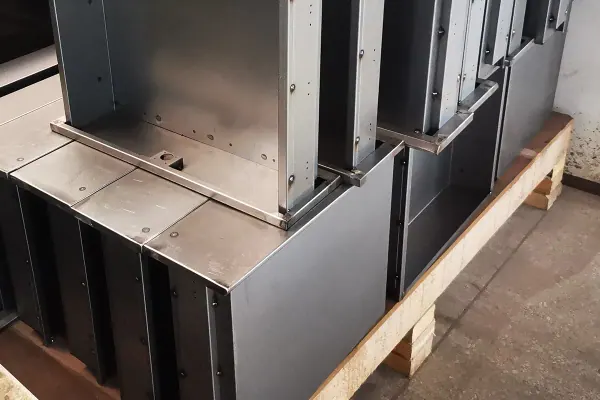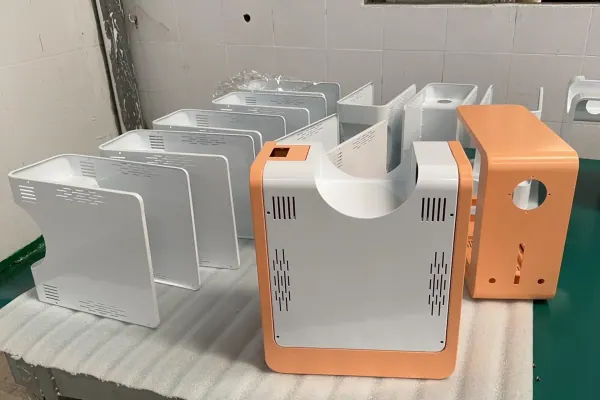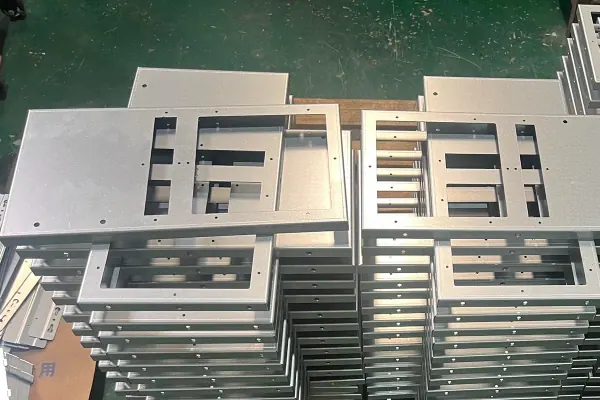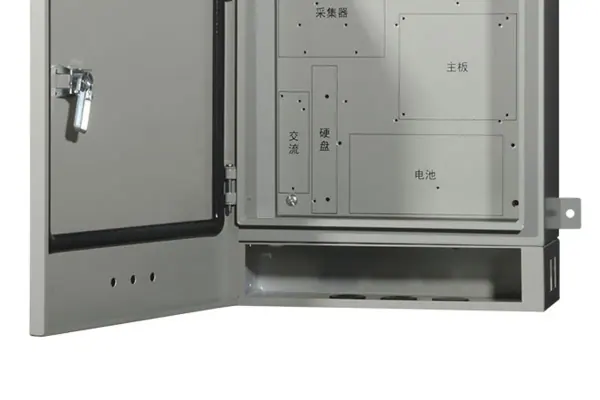
Refrigeration Cabinet Sheet Metal: Liners, Foam Access and Door Frames
How refrigerator liners, thermal breaks, foam injection access and door frames are designed in sheet metal to control condensation and cabinet squareness.
Topic
Enclosure geometry, sealing, cable management and serviceability for housings and cabinets.
23 articles
How refrigerator liners, thermal breaks, foam injection access and door frames are designed in sheet metal to control condensation and cabinet squareness.
Drum housing design, bracket stiffness, spin-load path and coating durability for laundry appliance sheet metal parts exposed to water and detergent.
How seam design, surface finish and hardware choice control particle shedding in cleanroom-rated sheet metal enclosures for controlled environments.
How nacelle cover fabrication handles curvature, sealing, access panels and lightning protection on large composite-metal turbine enclosures.
Utility-scale BESS enclosure design trade-offs — access panel layouts, IP sealing details, and corrosion protection for 20-year outdoor service.
How BESS cabinet fabrication balances heat removal against fire separation — material grades, vent paths, gaskets and the tolerances that decide both.
A practical comparison for enclosure decisions — tooling cost, volumes, geometry freedom, finish, thermal behaviour and where each process actually wins.
Designing wind energy enclosures for real sites — corrosion categories, material and fastener choice, seals and drainage, access, lifting and pressure equalisation.
How energy storage racks, battery enclosures and busbars are fabricated — structural load paths, thermal airflow, corrosion pairs, coating and what to specify.
How to design sheet metal equipment that survives outdoors — gaskets, seams, drainage, IP ratings, stiffening, and corrosion protection for enclosures and frames.
Explore how sheet metal components enable modern electronics manufacturing, from printed circuit board enclosures to rackmount systems and server chassis.
Designing electronics cabinets around the cables rather than after them — routing, bend radii, segregation, strain relief and service access.
Battery enclosure, rack and busbar design for energy storage — material grades, thermal paths, fire separation and the details that decide assembly.
A comprehensive guide to designing and fabricating battery enclosures for energy storage systems and electric vehicles, including material selection, structural design, and safety standards for renewable energy applications.
The mechanical side of an electronics product — chassis, enclosures, brackets and thermal paths — and why it is often the schedule-critical path to production.
Enclosure design from an engineer, a buyer and a decision-maker angle — shielding, thermal, sealing and sourcing, and where those requirements conflict.
Designing electronic boxes that balance functionality, accessibility, and manufacturability — port placement, ventilation, and serviceability.
Design for manufacturing applied to electronic enclosures — feature placement, bend and hardware access, cost reduction, and the prototype gate before production.
Designing a PCB enclosure that protects the board — clearances, mounting, EMI/RFI shielding, sealing and the fabrication details that keep it serviceable.
Chassis design principles that decide structural integrity — load paths, stiffening, datum strategy and thermal management, with a worked server chassis example.
Enclosures for LED displays — heat paths, structural support, service access and sealing, and the materials that protect the electronics behind the panel.
From design intent to finished enclosure — panel and door openings, joining strategy, hardware placement and the sequence that keeps every interface reachable.
Design considerations for electronics sheet metal — clearances, board mounting, shielding, thermal paths and the details that keep an enclosure serviceable.