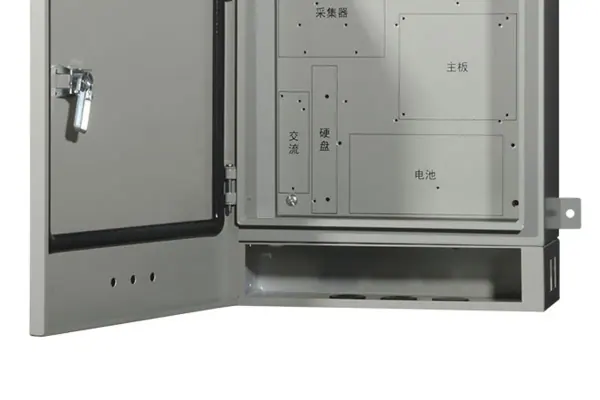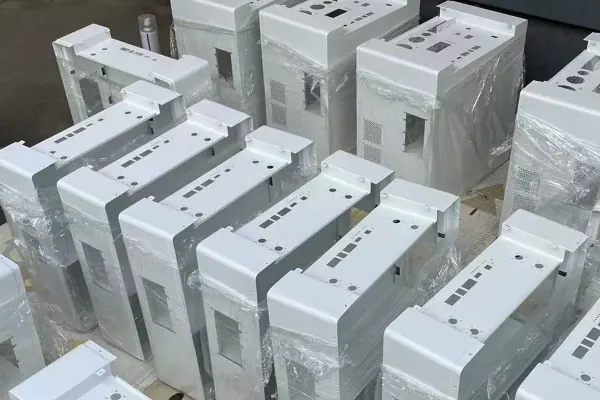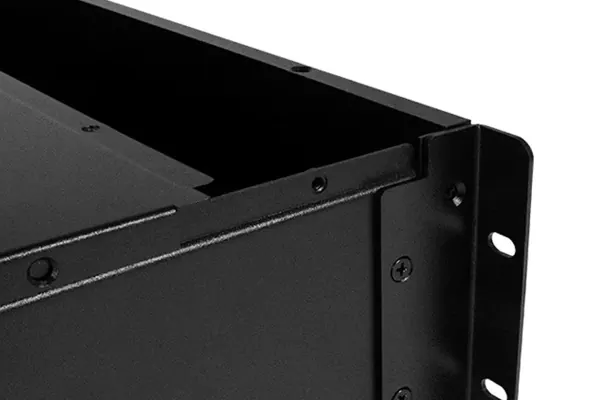
Containerised Energy Storage: Sheet Metal Interfaces and Cable Entry
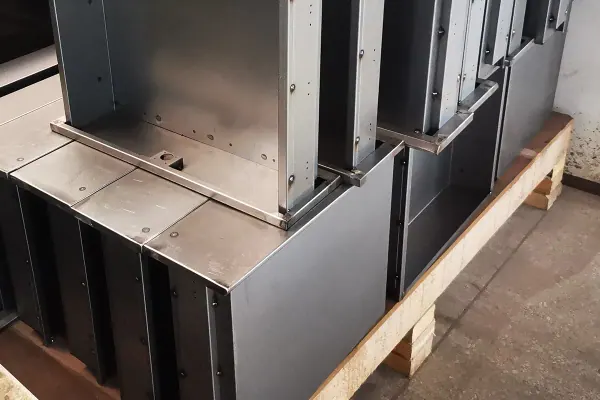
Design containerised energy storage sheet metal interfaces — cable entry, gland plates, HVAC penetrations and the tolerances that keep ISO corners true.
Category
Bend allowances, tolerances, hole placement, fastening and enclosure design. Practical design guidance aimed at parts that are manufacturable on the first submission.
20 articles
Design containerised energy storage sheet metal interfaces — cable entry, gland plates, HVAC penetrations and the tolerances that keep ISO corners true.
Utility-scale BESS enclosure design trade-offs — access panel layouts, IP sealing details, and corrosion protection for 20-year outdoor service.
A practical comparison for enclosure decisions — tooling cost, volumes, geometry freedom, finish, thermal behaviour and where each process actually wins.
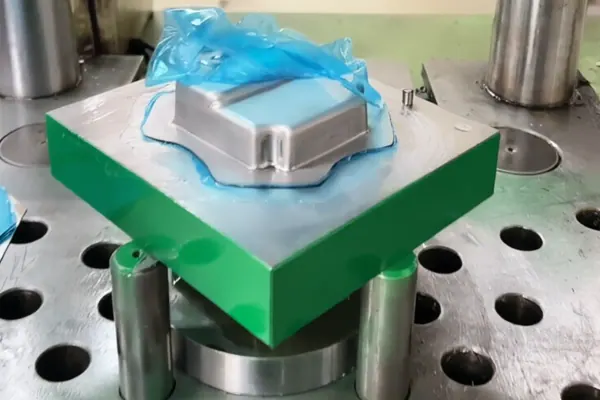
How stamping works from the strip up: blanking, piercing, notching, bending, drawing, embossing and lancing, with the materials, thickness ranges and design rules that decide whether a part is cheap or impossible.
How to design sheet metal equipment that survives outdoors — gaskets, seams, drainage, IP ratings, stiffening, and corrosion protection for enclosures and frames.
A practical guide to joining and fastening sheet metal — self-clinching inserts, weld nuts, rivets, screws, and formed features — with strengths and limits of each.
How to design sheet metal parts that weld cleanly and stay straight — joint types, fit-up, access, and the distortion issues that ruin welded assemblies.
Sharp corners, holes near bends, missing reliefs and tolerance errors: nine DFM mistakes that cause rework, and the drawing note that prevents each.
Realistic sheet metal tolerances for laser cutting, bending, and welded assemblies — and where people over-specify and pay the price.
How to pick sheet metal that survives rain, salt, UV, and industrial atmospheres — galvanized steel vs stainless 304/316 vs aluminium, and when each makes sense.
A clear guide to sheet metal gauge — how gauge numbers map to millimetres, how thickness affects strength and cost, and how to pick the right gauge.
Compare powder coating, wet spray painting, and anodizing for sheet metal — durability, cost, corrosion resistance, applications, and how to decide.
Learn how bend allowance and K-factor work in sheet metal fabrication, how to calculate flat blank length, and common mistakes that throw your parts out of tolerance.
Explore key design considerations for sheet metal components in home appliances, including material selection, manufacturability, cost optimization, and quality control.
What is changing in appliance sheet metal — thinner gauges, cosmetic surfaces and corrosion expectations — and what procurement teams now write into new programmes.
Front-load washer sheet metal broken down by component — base frames, cabinets and tub supports — with the design practice behind each one.
Load paths, base stability, joint design and material thickness for retail display stands — plus the handling and relocation loads that get forgotten.
Enclosure design from an engineer, a buyer and a decision-maker angle — shielding, thermal, sealing and sourcing, and where those requirements conflict.
Design for manufacturing applied to electronic enclosures — feature placement, bend and hardware access, cost reduction, and the prototype gate before production.
Design considerations for electronics sheet metal — clearances, board mounting, shielding, thermal paths and the details that keep an enclosure serviceable.