Sheet Metal vs Injection Moulding for Equipment Enclosures: How to Choose
Sheet Metal vs Injection Moulding for Equipment Enclosures: How to Choose
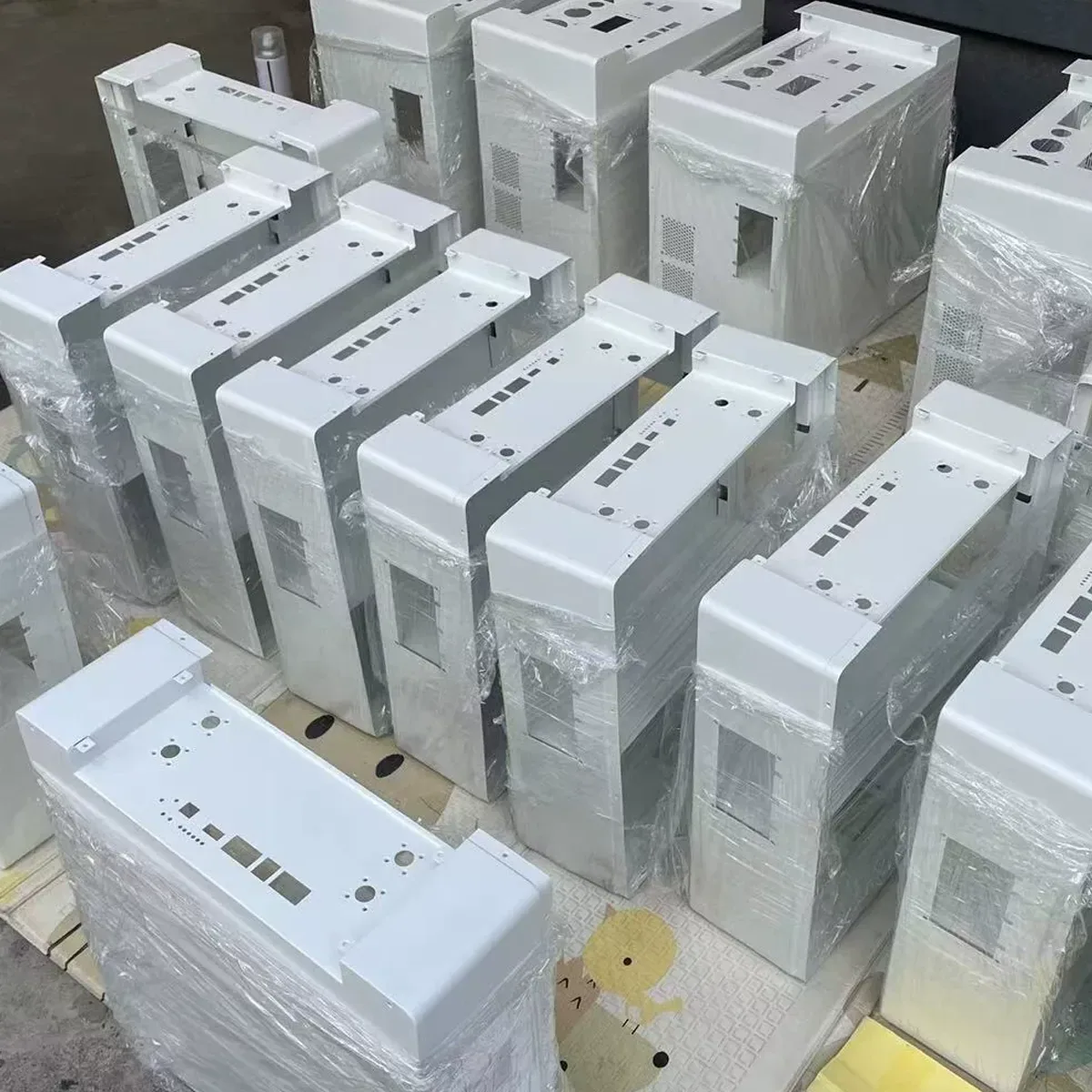
Sheet metal wins below roughly a few thousand units a year, when the enclosure has to be strong, when it must dissipate heat, or when the design will still change. Injection moulding wins at high volume with a design that is genuinely frozen, where per-part cost matters more than tooling cost and the enclosure does not need to carry structural load. Between those two positions it is a financial calculation about volume and change, not a matter of which process is better.
That single sentence decides most enclosure programmes. What follows is how to test whether it applies to yours.
The decision in one table
| Factor | Sheet metal | Injection moulding |
|---|---|---|
| Upfront tooling | Low — often none beyond programming and fixtures | High — a mould per part, plus likely a tool change for revisions |
| Cost per part at low volume | Lower | Higher, because tooling is amortised over few units |
| Cost per part at high volume | Higher — material and labour dominate | Lower — the mould cost disappears into volume |
| Design change after release | Moderate cost, moderate speed | Expensive; often a new or modified tool |
| Geometry freedom | Bends, forms, drawn features — mostly 2.5D | Complex 3D shapes, ribs, bosses, snap fits, undercuts |
| Strength and stiffness | High for its weight, especially with formed sections | Lower modulus; stiffness comes from ribs and wall design |
| Thermal | Conductive; the enclosure helps dissipate heat | Insulating; heat has to be managed another way |
| EMI shielding | Conductive by nature; grounding is straightforward | Needs conductive coating, inserts or a shield |
| Finish | Powder coat, wet paint, anodize, plating, brushed | Moulded-in colour and texture, with limited post-finish |
| Wall thickness | Material thickness chosen for the job | Governed by moulding rules; thick walls sink and warp |
| Tooling lead time | Short | Long — mould design, build, trial, then possibly revision |
| Minimum economic quantity | One | Usually thousands, sometimes tens of thousands |
Where sheet metal is the right answer
Low and medium volume. Below roughly a few thousand enclosures a year, tooling amortisation usually keeps moulding more expensive per part than fabrication. The crossover moves with part size and complexity, but the direction does not.
The design is still moving. If the enclosure is going to change as the product is validated — new connector, extra board, different mounting — a mould is a liability. Every revision that touches a mould face costs money and costs weeks. Sheet metal absorbs those changes by re-cutting and re-forming.
Structural duty. Frames, chassis, brackets and enclosures that carry load suit formed sheet. A formed return flange or a folded section is a very efficient way to buy stiffness, and a moulded wall competes with it by adding ribs, which adds tooling complexity.
Heat. A metal enclosure is part of the thermal path. Where the electronics generate meaningful heat, a conductive enclosure can remove heat passively that a plastic one cannot. This is often the factor that decides a design before cost is even considered.
EMI and grounding. A conductive enclosure is a straightforward shield. A moulded enclosure gets there with conductive coatings, metal inserts, gaskets or a separate shield — all of which reintroduce the parts and processes moulding was supposed to remove.
Metal-specific expectations. Buyers of industrial, medical, laboratory and outdoor equipment often expect a metal enclosure. It reads as durable, tolerates being dragged and bumped, and can be repaired.
Where injection moulding is the right answer
High volume with a stable design. When the enclosure ships in quantities where the mould cost is a small fraction of total programme cost, and the design has settled, moulding is usually cheaper per unit and much cheaper per unit at the margin.
Organic geometry. Rounded transitions, integral bosses, snap fits, living hinges, internal ribs and complex curves are natural in a mould and awkward or impossible in sheet metal. If the product’s industrial design depends on that vocabulary, that constraint is real.
Non-conductive or insulating requirements. Where the enclosure must isolate electrically, or where a metal enclosure would create a shock or short-circuit risk, moulded plastic may be the safer answer.
Colour and texture without a process step. Moulded-in colour removes the coating step and the cosmetic risk that comes with it, which has value beyond the unit price.
Weight with no thermal or EMI duty. For a small, low-power, non-shielded product, a moulded enclosure can be lighter and cheaper than a fabricated one.
The questions that actually decide it
Work through these in order. The first one that has a clear answer usually settles the process.
- What is the annual volume, and how confident are you in it? A forecast that might triple or might not happen at all argues against committing to a mould.
- Will the design change in the next twelve months? Be honest. Almost every first-generation product does.
- Does the enclosure carry load, or is it only a skin? Load argues for metal.
- How much heat is inside, and where does it go? Conductive enclosure is a thermal component, not just a box.
- Is EMI shielding or grounding required? This often decides the material on its own.
- Does the industrial design depend on organic geometry? If yes, that is a genuine constraint, not a preference.
- What does the finance model say at the forecast volume? Run the mould cost and the per-part costs at the low, expected and high forecasts, not just the expected one.
A hybrid that is often the best answer
The two processes are not mutually exclusive, and the most common mistake is treating them as alternatives for the whole product.
- Metal chassis inside, moulded bezel outside. Structure and thermal from sheet metal; interface and appearance from moulding. This is how a great deal of equipment is built.
- Fabricated base, moulded cover. Suits products where the load path and connections live on the base and only the visible skin benefits from a mould.
- Sheet metal for low-volume launch, tooling for the volume ramp. Launch in fabricated enclosures, validate the market, then commit to a mould once the design and the demand have both stabilised. This is the lowest-risk sequence for a new product, and it is why fabricated enclosures remain common even in products that eventually mould.
- Moulded internal carriers with a metal outer shell where the interior geometry is complex but the external environment is harsh.
If a programme is likely to end up moulded, designing the fabricated version with that in mind — consistent wall reference, sensible split lines, mounting points that can be translated into a mould — makes the eventual transition far cheaper.
Where the cost actually hides
The comparison is usually made on unit price, which is the least reliable number in it.
- Tooling is not only the mould. Add design, trial, likely revision, and the storage and maintenance of the tool over its life.
- A design change has a different cost in each process. In fabrication it is re-cut parts. In moulding it can be a tool modification, and tool modification schedules are not yours to control.
- Finishing is a separate process in each case. Powder coating adds a step and a cosmetic risk to metal; moulded-in colour removes a step but fixes the colour in the tool.
- Assembly part count differs. Moulding can consolidate several fabricated parts into one, which changes the assembly cost as well as the part cost.
- Freight and damage. A coated metal enclosure can be damaged in transit and needs packout designed for it. A moulded part is more forgiving.
- End of life. Metal is straightforward to recycle and often to repair. Moulded enclosures with inserts and coatings are harder.
The comparison worth making is total programme cost across the volumes you actually expect, not the piece price at one quantity.
What to do next
If the answer is sheet metal, the enclosure is a fabrication problem and the decisions are the usual ones — see sheet metal enclosure design and fabrication and sheet metal enclosures, chassis and cabinets.
If the volume case points to moulding, the sensible sequence for most first-generation products is still to launch in fabrication, prove the design and the demand, and commit to a tool once both have settled.
Either way, the drawing is where the cost is decided. Running it against the sheet metal drawing requirements and DFM checklist before release surfaces the omissions that otherwise become change orders.
Related reading: sheet metal enclosure design and fabrication, electronics enclosure design requirements, and hidden costs in sheet metal fabrication.