Wind Energy Component Fabrication: Materials for Coastal and Offshore Sites
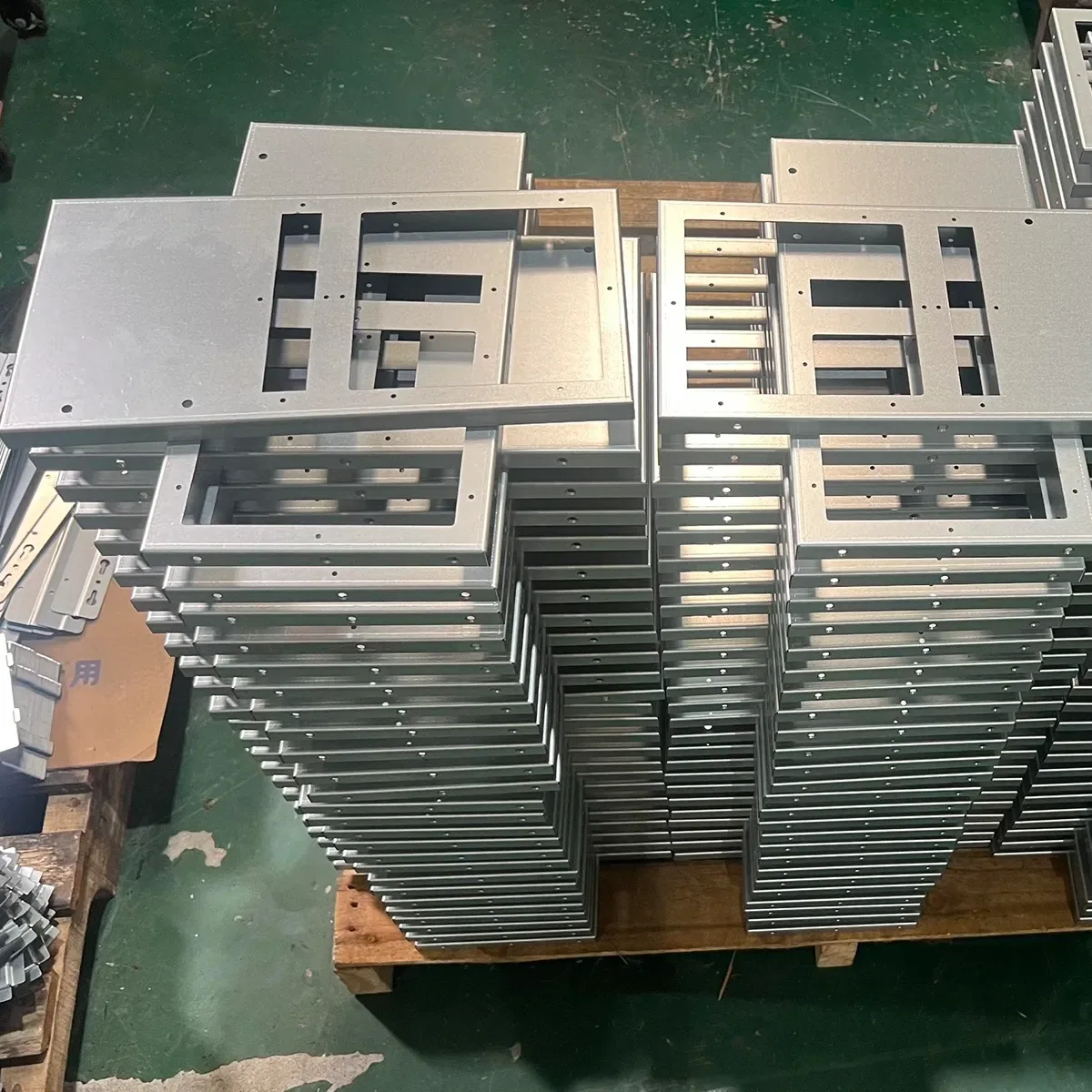
Wind Energy Component Fabrication: Materials for Coastal and Offshore Sites
For coastal and offshore wind components, the material decision is really a corrosion decision. Chloride exposure, constant humidity and limited maintenance access mean the cheapest material that meets the structural requirement at the design stage is often the most expensive one over a 25-year service life. The workable approach is to classify the site first, pick the protection system second, and only then choose the substrate.
Classify the site before choosing anything
Corrosion classification standards such as ISO 12944 describe environments from C1 (very low) to C5 (very high), with an additional immersion category for submerged zones. Coastal and offshore wind sites typically fall in the upper part of that scale, but the classification is not uniform across a single turbine:
| Turbine zone | Typical classification | Notes |
|---|---|---|
| Internal tower, sealed and dehumidified | C2–C3 | Much milder than outside |
| Internal tower, ventilated | C3–C4 | Condensation and humidity dominate |
| External, above splash zone, onshore coastal | C4–C5 | Wind-driven salt spray |
| External, offshore atmospheric | C5 | Continuous chloride load |
| Splash and tidal zone | C5 plus immersion | Needs a different strategy entirely |
| Buried or immersed | Immersion category | Often cathodic protection |
The important consequence: the same turbine can justify three different protection systems in three different places. Over-specifying the internals wastes money; under-specifying the splash zone causes early failure.
Substrate options
| Material | Corrosion behaviour in chloride | Relative cost | Typical wind energy use |
|---|---|---|---|
| Hot-dip galvanised steel | Good, sacrificial at damaged areas | Low | Tower internals, platforms, brackets |
| Painted carbon steel | Depends entirely on coating integrity | Low | External covers with a C4/C5 system |
| Weathering steel | Moderate; not suited to salt spray | Low–moderate | Rarely suitable offshore |
| Aluminium 5052 / 5083 | Very good, especially 5083 in marine | Moderate | Covers, panels, light structures |
| Aluminium 6061 | Good, but less marine-tolerant than 5083 | Moderate | Machined brackets and interfaces |
| Stainless 304 | Good inland, pitting risk in chloride | Moderate–high | Internal hardware |
| Stainless 316 / 316L | Good marine resistance | High | Marine fasteners, splash-zone parts |
| Duplex stainless | Very good, high strength | Very high | Critical high-load marine parts |
| Copper alloys | Good, used for fasteners and fittings | High | Specialist hardware only |
Two material notes that come up repeatedly. First, 5083 is generally preferred over 6061 where aluminium is welded and exposed to seawater; 6061 loses strength in the heat-affected zone and is less resistant to stress corrosion. Second, 304 stainless is not a marine grade despite its reputation — 316 or 316L is the usual minimum for chloride exposure.
Galvanising: where it works and where it stops
Hot-dip galvanising offers sacrificial protection, which means a scratch does not immediately become a corrosion site. That property makes it valuable where site damage is likely during installation. Limits worth knowing:
- Coating thickness, and therefore life, depends on steel chemistry and section thickness. Very thick sections can require a different approach because the coating builds differently.
- Galvanised surfaces need a suitable pre-treatment before painting. Painting directly over a poorly prepared galvanised surface is a common cause of coating failure.
- Galvanising does not protect inside closed sections if there is no drainage or venting. Fabrication must include drain and vent holes so the molten zinc can escape and air can circulate.
- Threaded fasteners and closely toleranced holes may need re-tapping after galvanising, which removes coating inside the thread and requires a repair coating.
Coating systems
For painted steel in a C4 or C5 environment, a typical system is a primer plus an intermediate or topcoat, with a specified dry film thickness. Systems in the 160–320 µm range are common for the most aggressive categories. Fabrication requirements that make the coating work:
- Edge preparation. Coating pulls back from a sharp sheared edge. A radiused or chamfered edge holds film better. This is one of the few cases where a deburring operation has a direct life-cycle payoff.
- Surface preparation. Blast cleanliness and profile are specified, not assumed. Coating over mill scale or rust is a guaranteed early failure.
- Weld preparation. Weld spatter, slag and fume deposits are contamination. Welds need cleaning before coating.
- Cut-edge and weld repair. A zinc-rich repair coating at sheared edges and weld zones is normal practice for galvanised or painted structures.
- Coating at interfaces. Coating thickness varies over edges and inside holes, so a coated joint is not an isolated joint.
Fasteners and joints
Fasteners are the most common corrosion failure point on coastal equipment, because they combine a small anode, a stress concentration and a coating that has usually been damaged during installation.
- Use 316 or 316L stainless for exposed marine fasteners, or a coated fastener rated for the environment.
- Avoid stainless fasteners in aluminium structure without isolation, particularly in splash zones. The aluminium becomes the anode.
- Specify a thread lubricant or anti-seize that is compatible with both materials, so the joint can still be disassembled.
- Use bonded or sealed washers under heads where water can sit.
- Where dissimilar metals must meet, break the electrical path with an isolating washer or a barrier tape, and keep the cathodic area small relative to the anodic area.
| Joint situation | Recommended practice | Avoid |
|---|---|---|
| Stainless bolt into aluminium | Isolating washer plus coated bolt | Direct bare contact |
| Galvanised bracket to painted tower | Coated interface, sealed edges | Coating damage left unrepaired |
| Aluminium tray to galvanised support | Barrier tape or gasket | Bare metal on bare metal |
| Immersed or splash-zone fixing | 316 hardware, sealed, inspectable | Cadmium or zinc-plated fasteners |
Design details that decide service life
Beyond material choice, a handful of geometry decisions separate components that last from components that fail:
- Drainage. Every upward-facing surface needs a fall, and no closed section should trap water. A formed sill with a drip edge is worth more than an extra coat of paint.
- Crevices. Lap joints, gasket seats and unsealed overlaps create crevices where chlorides concentrate. Sealing the crevice or designing it open is better than leaving it.
- Accessibility for inspection. A joint that cannot be reached cannot be maintained. Offshore maintenance windows are expensive, and an inspectable design is a cheaper design.
- Galvanic couples at bolted joints. A small anode in a large cathode area corrodes fast. Material pairs and area ratios belong in the drawing notes.
- Fatigue and corrosion together. A corrosion pit in a fatigue-loaded bracket is a crack initiator. For dynamic components, corrosion protection is a fatigue measure, not a cosmetic one.
More detail on the interaction between outdoor siting and material choice is in the sheet metal material selection for outdoor environments article.
Verification and documentation
For offshore and coastal components, inspection is usually documented rather than visual: coating dry film thickness measurements, galvanising coating mass, salt-spray test results for qualified systems, and surface profile checks on blasted steel. The material selection guide for renewable energy sheet metal components sets out how these choices sit alongside the rest of a renewable energy bill of materials.
When components are being sourced across markets, the sourcing sheet metal parts from China guide covers how to specify and verify coating and material test records, and the custom sheet metal fabrication page describes the wider production route.
FAQ
Is stainless steel always the safest choice offshore? No. It has good chloride resistance in the right grade, but it is expensive, can suffer crevice corrosion, and can accelerate corrosion in adjacent aluminium if isolation is neglected.
How long should a C5 coating system last? Most specifications target a defined durability band rather than an exact life. The practical answer depends on surface preparation quality and on how much site damage the system takes during installation.