Choosing Sheet Metal for Outdoor & Corrosive Environments: A Practical Material Guide
Choosing Sheet Metal for Outdoor & Corrosive Environments: A Practical Material Guide
Outdoor metal parts die at the seams and edges long before the panel itself fails. Rust from rain, pitting from salt air, and fading from UV all attack the weakest points. If you’re building enclosures, racks, brackets, or housings that live outside, the material choice is the single biggest decision you’ll make.
This guide compares the realistic outdoor options — galvanized steel, stainless 304/316, and aluminium — so you can choose based on cost and the actual environment, not just reputation.
First, know the enemy
Corrosion isn’t one thing. Match the material to the specific threat:
- Rain and humidity — general rusting; mild carbon steel is the most vulnerable.
- Coastal salt air — chloride attack, which is especially harsh and needs molybdenum-rich stainless (316).
- Industrial pollutants / acids — sulphur dioxide and acid rain; needs high alloy content.
- UV / sun — attacks paint, not the metal itself. Choose a UV-stable finish, not necessarily an exotic metal.
- Groundwater / contact — crevice corrosion where parts sit wet for long periods.
The realistic options
Galvanized (hot-dip or electro) steel
Zinc coating protects steel by sacrificial action — the zinc corrodes first. It’s the workhorse for outdoor brackets, frames, and structures.
Strengths:
- Excellent cost-to-corrosion-performance ratio
- Zinc self-heals small scratches (galvanic protection)
- Great for structural, non-decorative parts
Limits:
- Not as decorative as painted or stainless
- Can show white “storage stain” if stacked wet
- Welding destroys the coating locally — repaint or re-galvanize the weld zone
Stainless steel 304 and 316
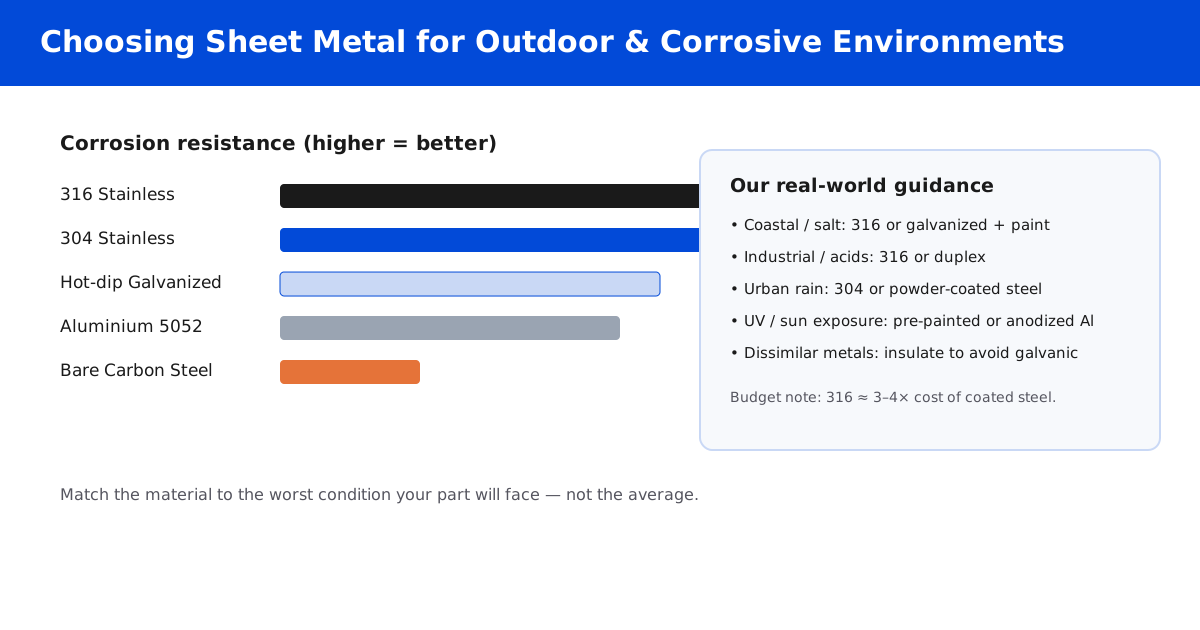
Stainless doesn’t rust because chromium forms a passive oxide film. The difference between 304 and 316 is molybdenum: 316 has ~2% more, which buys far better resistance to chlorides.
| Grade | Best for | Relative cost |
|---|---|---|
| 304 | Urban, indoor, mild outdoor | ££ |
| 316 | Coastal, marine, chemical | £££ |
Because 304 and 316 are close in price to each other but far from steel, the question is whether you need stainless at all. For a truly aggressive coastal or chemical environment, 316 is worth the premium. For a normal outdoor panel, a well-coated galvanized or pre-painted steel part is more economical.
Aluminium
Aluminium forms a protective oxide that actually grows back if scratched. It’s light, won’t rust (no red oxide), and is easy to form and finish.
Strengths:
- Lightweight, corrosion-resistant
- Great for anodizing and painted finishes
- Non-magnetic, good for electronics
Limits:
- Softer — dents more easily
- Can “poultice corrode” where it sits against other metals or salt
- Higher material cost than steel
The galvanic trap nobody warns about
If you put two dissimilar metals in contact in a wet environment, the more “noble” one drives the other to corrode. Aluminium bolted to stainless is the classic example — the aluminium, not the steel, will be eaten.
Fix: isolate the metals — use insulating washers, gaskets, or a protective coating between them. When in doubt, keep fasteners compatible with the sheet.
How to decide (a practical sequence)
- What’s the worst condition the part will actually face? (Not the average — the worst.)
- Is appearance a priority, or is this a functional frame?
- What’s the budget per kg and the expected lifespan?
- Will it see salt or chemical exposure? If yes, lean 316 or coated steel.
- Does it connect to a different metal? Plan isolation.
Quick guidance table
| Environment | Usually best |
|---|---|
| Dry urban / indoor | Powder-coated mild steel |
| Rain & general outdoor | Galvanized + paint, or pre-painted steel |
| Coastal / salt air | 316 stainless or galvanized + epoxy-powder |
| Chemical / industrial acids | 316 or duplex stainless |
| UV-heavy, decorative | Anodized or pre-painted aluminium |
Don’t forget the coating is part of the material decision
A carbon-steel part with a proper zinc-rich primer + powder topcoat can outlast a bare aluminium part in many outdoor situations, at lower cost. The material alone isn’t the answer — it’s material plus finish.
FAQ
Is galvanized steel good for outdoor use?
Yes. It’s one of the best cost-effective choices for rain and general outdoor exposure. For heavy salt or chemical environments, pair it with a suitable paint system.
Is 304 or 316 better for a coastal enclosure?
316, because the molybdenum resists chloride pitting. If you’re near salt water or in a high-humidity marine region, don’t skimp.
Does stainless steel really never rust?
It can rust in the wrong conditions — crevice corrosion from salt deposits, or “tea staining” on exposed stainless. Grade and surface finish matter.
Can I use aluminium outdoors?
Yes, but use the right alloy (e.g. 5052) and a suitable finish. Avoid direct contact with stainless and give it a way to drain.
Related reading:
- Galvanized Sheet Metal Fabrication: Properties & Applications
- Stainless Steel Sheet Fabrication: Properties & Applications
- Designing Sheet Metal for Outdoor Equipment
Tell us where your part will live and how long it has to last, and we’ll match a material and finish that hits both without paying for more corrosion resistance than you need.