Commercial Oven Sheet Metal: Heat, Cleanability and Interface Fit
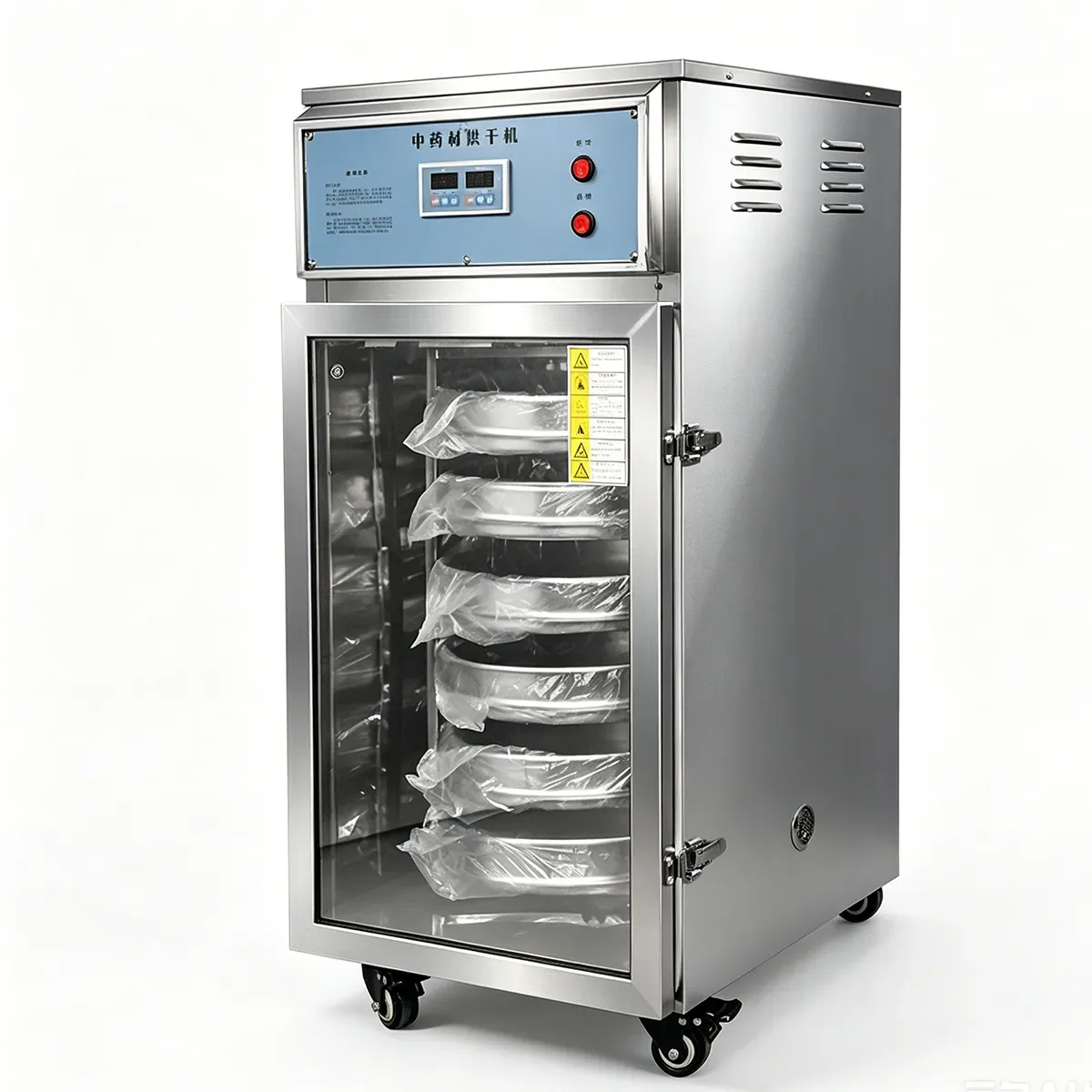
Commercial Oven Sheet Metal: Heat, Cleanability and Interface Fit
Commercial oven sheet metal has to survive three pressures at once — sustained heat with rapid cycling, a nightly cleaning regime that is often chemically aggressive, and a set of interfaces where the door, rack, blower and controls all have to line up after thousands of heat cycles.
The parts that fail first are rarely the ones that get the most attention at design review. They are the door seal land, the rack support rail and the insulation retainer.
Temperature Classes and What They Do to Steel
Commercial ovens are not one product. The thermal duty varies widely, and so does the material logic.
| Oven type | Typical cavity temperature | Dominant material issue |
|---|---|---|
| Holding and warming cabinets | 60–90 °C | Cleanability; condensation on cold surfaces |
| Convection and deck ovens | 200–300 °C | Thermal expansion at panel joints and door seals |
| Pizza deck and bake ovens | 300–450 °C | Creep and oxidation at rails and supports |
| Combination steam ovens | 100–300 °C with steam | Chloride corrosion and sealing at every joint |
| High-temperature and self-cleaning | 450–550 °C | Scaling, distortion, and finish breakdown |
Two consequences follow. First, mild steel is a reasonable cavity material up to roughly 300 °C if it is properly coated, but above that coatings degrade and stainless becomes the practical choice. Second, the differential expansion between a hot cavity and a cooler outer shell must be designed in, not absorbed by the fasteners.
Stainless Grades in Oven Service
Austenitic stainless dominates commercial oven cavities, and the grade choice is mostly about chloride exposure and cleaning chemistry:
- 304 / 304L is the general standard for convection and deck oven cavities. It resists food acids and most alkaline cleaners.
- 316 / 316L is used where chloride-based sanitisers, heavy steam or saline food contact is expected. The molybdenum addition raises the chloride pitting threshold.
- 430 ferritic appears on some non-critical panels for cost, but it has lower formability and no molybdenum, so it is a poor choice where aggressive cleaning is routine.
- Aluminised steel is used for heat shields and some high-temperature panels where a stainless surface is unnecessary.
The stress-relief and continuous-service temperature limits for these grades should come from the mill data sheet, not from a rule of thumb. The practical threshold is that prolonged service above roughly 425–450 °C in the 300 series risks sensitisation and sigma-phase embrittlement in the heat-affected zone of welds.
Thermal Expansion: The Numbers Behind the Joints
Stainless expands roughly 16–18 × 10⁻⁶ per °C. Over a 600 mm cavity panel heated from 20 °C to 300 °C, that is about 3 mm of growth. If both ends of that panel are fastened to a cooler frame, the panel either buckles or the fasteners yield.
| Material | Coefficient of thermal expansion (µm/m·°C) | Expansion over 600 mm at ΔT = 280 °C |
|---|---|---|
| 304 / 316 stainless | 16–18 | ≈ 2.7–3.0 mm |
| Carbon steel | 11–13 | ≈ 1.8–2.2 mm |
| Aluminium | 22–24 | ≈ 3.7–4.0 mm |
| Aluminised steel | 12–14 | ≈ 2.0–2.4 mm |
Design responses that work:
- Slotted or oversized holes at one end of a long panel, so growth is accommodated by sliding rather than stress.
- Floating captive fasteners or shoulder bolts that permit movement while holding the panel down.
- Expansion joints and formed corrugations in long panels, which absorb growth elastically.
- Datum at the centre and let both ends move symmetrically, which halves the total travel per end.
Door Sealing and the Seal Land
The door is the highest-wear assembly in any commercial oven. Its job is to seal a hot, expanding cavity against a cooler outer shell while staying aligned after thousands of cycles.
Three elements decide whether it does:
- Flatness of the seal land. A gasket can only compensate for a limited amount of waviness. The land should be formed flat, reinforced against thermal bow, and inspected against a defined tolerance.
- Hinge stiffness and alignment. Hinge droop shows up as a leak at the top of the door. A hinge bracket that flexes under the door mass will not hold a seal.
- Gasket selection. Silicone gaskets cover most commercial oven duties; EPDM is common on steam applications; PTFE-coated and glass-fibre cords appear where the gasket must resist sticking to the cavity face. The gasket must be replaceable without dismantling the door.
Seal land flatness and hinge alignment are also where tolerance stack-up quietly accumulates: door skin, door frame, gasket groove, cavity front face, hinge bracket and cabinet front are six parts, and their combined variation determines whether the door leaks.
Cleanability as a Design Constraint
Commercial kitchens clean ovens nightly, usually with a caustic or high-alkaline product, sometimes with a chloride-bearing sanitiser. Cleanability is therefore a geometry problem as much as a chemistry problem.
Design rules that hold up in service:
- Eliminate horizontal ledges and face-up flanges inside the cavity, where fat collects and carbonises.
- Radius internal corners rather than leaving sharp internal joints. A 3–6 mm inside radius is cleanable with a sponge; a sharp 90° internal corner is not.
- Slope floors slightly toward a drain where liquids are used.
- Avoid exposed fastener heads and blind holes on food-contact surfaces.
- Make the rack and shelf supports removable, so the supports can go through a dish machine along with the racks.
- Ensure no blind cavity exists between the cavity wall and the outer panel where grease can accumulate and later smoke.
Coatings require the same scrutiny. A powder coat on a cavity surface above 200 °C will discolour and eventually fail; on an exterior shroud it is fine. Where the exterior must be colour-matched to the rest of the kitchen, powder is normally the right route, and the general behaviour of powder versus wet paint is compared in the coating comparison article.
Insulation, Airflow and the Outer Shell
Insulation retains heat, but it also creates the conditions for condensation on the cool side of the shell. The sheet metal parts in this assembly do three jobs:
- Support the insulation without compressing it, since compression reduces its effective R-value.
- Separate the cavity from the controls, keeping the wiring compartment within its own temperature rating.
- Guide cooling airflow to the door glass, handle and electronics, which are often the parts that fail first.
Ventilation paths should be designed as intentional geometry, not as leftover gaps. A flue that relies on an uncontrolled gap between two panels will vary between units, and the door glass temperature will vary with it.
Interface Fit: Where Ovens Actually Get Rejected
| Interface | Typical failure | Design response |
|---|---|---|
| Door to cavity front | Leak, uneven seal compression | Reinforce the land; control stack-up across the six parts |
| Rack to support rail | Rack rocks or jams | Define rail pitch and the rack’s engagement depth from a shared datum |
| Control panel to shroud | Visible gaps, misaligned buttons | Locate on a common datum, not on individual panel edges |
| Blower to cavity rear | Air leaks, noise | Machined or formed mounting flange with a gasket land |
| Unit into a counter or stacking frame | Won’t slide in, feet off the floor | Define the external envelope and the foot plane explicitly |
| Steam generator to cavity | Corrosion and leaks at joints | Dissimilar-metal isolation and tested joint design |
Most of these are tolerance allocation decisions made at the drawing stage. The practical limits of each fabrication process are set out in the sheet metal tolerances guide.
Verification Before Production
A commercial oven cavity is worth testing as an assembly, not as a set of parts. A first article should confirm the cavity dimensions after welding, seal land flatness, door closure force, gasket compression, and the interface positions for racks and controls. Where the cavity is welded, a distortion check before and after any post-weld operation is also worth recording.
Running a thermal cycle before the first article is signed off is the cheapest way to find a joint that will not survive. Common design errors that show up at that stage are catalogued in common sheet metal design mistakes.
Material selection specifically for oven components is discussed in the oven sheet metal material selection article, and the home appliance sheet metal parts pages group the parts families for a programme. For new cavity designs, a review against the sheet metal DFM checklist before release is the cheapest point to remove weld distortion and cleaning traps.