Designing Sheet Metal for Outdoor Equipment: Weatherproofing, Seams, and Structure
Designing Sheet Metal for Outdoor Equipment: Weatherproofing, Seams, and Structure
Outdoor equipment takes a beating. Rain, sun, dust, temperature swings, and wind all find the weak points — and with sheet metal, the weak points are almost always the seams, joints, and flat faces.
This guide walks through how to design outdoor sheet metal gear that actually survives: sealing, drainage, IP ratings, and structural stiffness.
Where outdoor equipment fails first
- Seams — water and salt get in through gaps and corrode the interior
- Edges — sharp edges collect water and chip coated finishes
- Flat unsupported faces — oil-can and sag under wind or thermal cycling
- Hardware — fasteners and hinges corrode or seize
- Drainage — trapped water pools and rusts from the inside
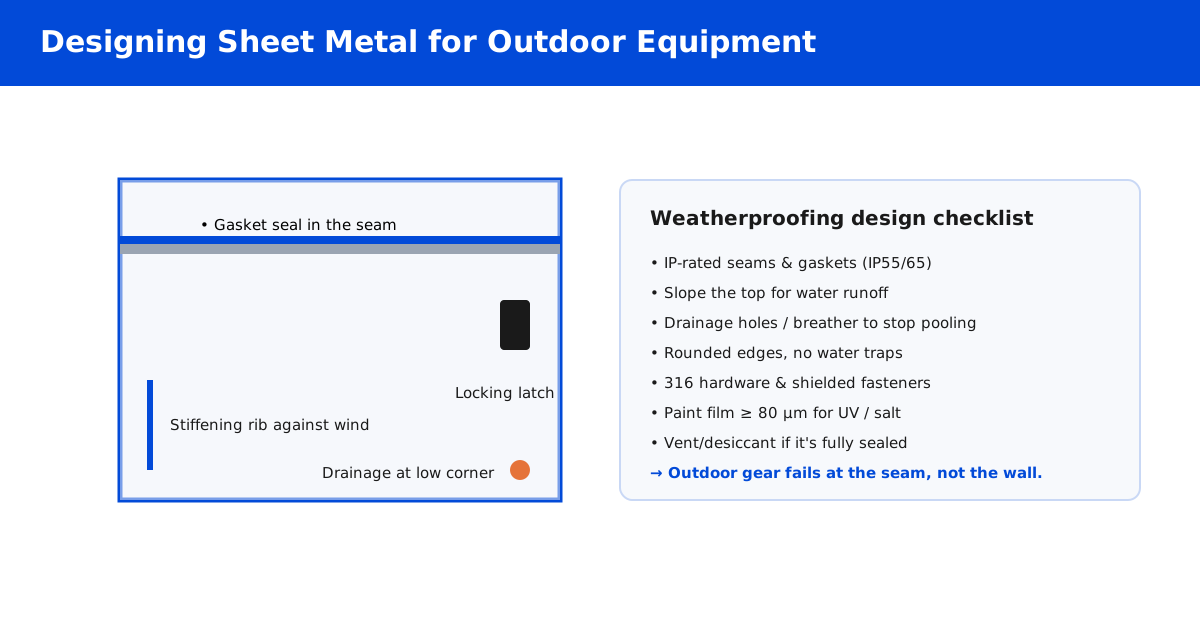
Design for the seam, not the wall — that’s where most outdoor failures begin.
Sealing the seams
Choose the right protection level (IP rating)
IP ratings tell you how well a part keeps out solids and water:
- IP54 — dust-resistant, splashes
- IP55 — dust-resistant, water jets
- IP65 — dust-tight, water jets
- IP66 — dust-tight, powerful jets
- IP67 — dust-tight, temporary immersion
Match the IP to the environment. A sun-exposed cabinet in mild weather needs less sealing than a part that sees rain or washdowns.
Use a gasket at the seam
For a sealed enclosure, you need a gasket between the lid and the body. Common choices:
- Silicone — flexible, good temperature range, UV stable
- EPDM — good outdoor and weather performance
- Foam / closed-cell — cheap, simple, for lighter duty
Design a gasket channel or a flat seating face so the gasket is compressed consistently, and make sure there’s a clamping force (latches, screws) to hold it.
Make the seam work harder
- Tongue-and-groove or rebated edges create a longer, harder-to-breach path.
- Overlapping faces prevent a straight water path.
- Treat the entry point — a gasket plus a drainage path is better than a gasket alone.
Drain and breathe
A fully sealed enclosure is hard to achieve and can create condensation. Often the best outdoor design is to seal to keep big water out, then let small water out and air move.
- Add a drainage hole at the lowest point so any ingress drains away.
- Add a breather or vent (or a filter vent) so pressure changes don’t suck in moisture.
- Use a desiccant in fully sealed electronics enclosures to absorb residual moisture.
Design the structure for stiffness
Thin sheet metal is flexible. Outdoors, wind load, snow, and thermal cycling will find that flex.
Stop oil-canning
Adding stiffening ribs, embossments, or flanged edges dramatically increases stiffness for very little weight. A flat wall is the weakest thing in an enclosure.
Consider the load
- What wind load will the panel see?
- Will snow or ice build up on it?
- Will it be mounted on a moving or vibrating structure?
A little stiffening now saves embarrassing sagging later.
Corrosion protection that lasts
Pair the material and finish
- Steel + zinc-rich primer + powder topcoat — excellent for outdoor, cost-effective
- 316 stainless — for coastal / chemical / salt-heavy environments
- Aluminium + anodize or pre-paint — light, rust-free, good for UV
Protect the edges
The coated film is thinnest at the edge, where you slice a radius. Design for a rounded edge or a finish that tolerates the effect, and keep the coating thickness up on exposed edges.
Isolate dissimilar metals
If you bolt stainless hardware to an aluminium panel, the aluminium will corrode. Use insulating washers, gaskets, or a protective coating between them.
Shield the hardware
Use stainless fasteners, and design drainage or covers to keep water off hinges, latches, and screw heads.
A practical outdoor design checklist
- IP rating chosen to match the environment
- Gasket and sealing face designed (or a drainage-then-vent approach)
- Drainage at the lowest point
- Breather / vent to avoid condensation
- Ribs or flanges to stiffen flat faces
- Material + finish rated for the worst environment
- Edges rounded or finish-tolerant
- Dissimilar metals isolated
- Hardware chosen for corrosion & UV resistance
FAQ
What IP rating do I need for outdoor equipment?
Depends on exposure. IP65 is a common baseline for outdoor cabinets that may see rain or washdown. IP54 is fine for sheltered outdoor. For submersion, IP67.
Why does my outdoor enclosure get condensation inside?
A fully sealed enclosure traps air that condenses as it cools. Fix it with a breather vent or a desiccant, not by sealing it tighter.
Do I need a gasket on an outdoor panel?
If you’re sealing against water and dust, yes. Without a gasket, even a well-fitted lid will let moisture and dust in over time.
How do I stop a sheet metal panel from oil-canning?
Add stiffening ribs, an embossed pattern, or a flanged edge. A flat unsupported face is the weakest design.
Related reading:
- Choosing Sheet Metal for Outdoor & Corrosive Environments
- Sheet Metal Enclosure Design & Fabrication Overview
- Powder Coating vs Wet Painting vs Anodizing
If you’re designing outdoor gear and want a second set of eyes on the seal, structure, and corrosion scheme, we’re happy to review the design.