Sheet Metal Gauges Explained: Gauge to mm, Strength, and Cost Trade-offs
Sheet Metal Gauges Explained: Gauge to mm, Strength, and Cost Trade-offs
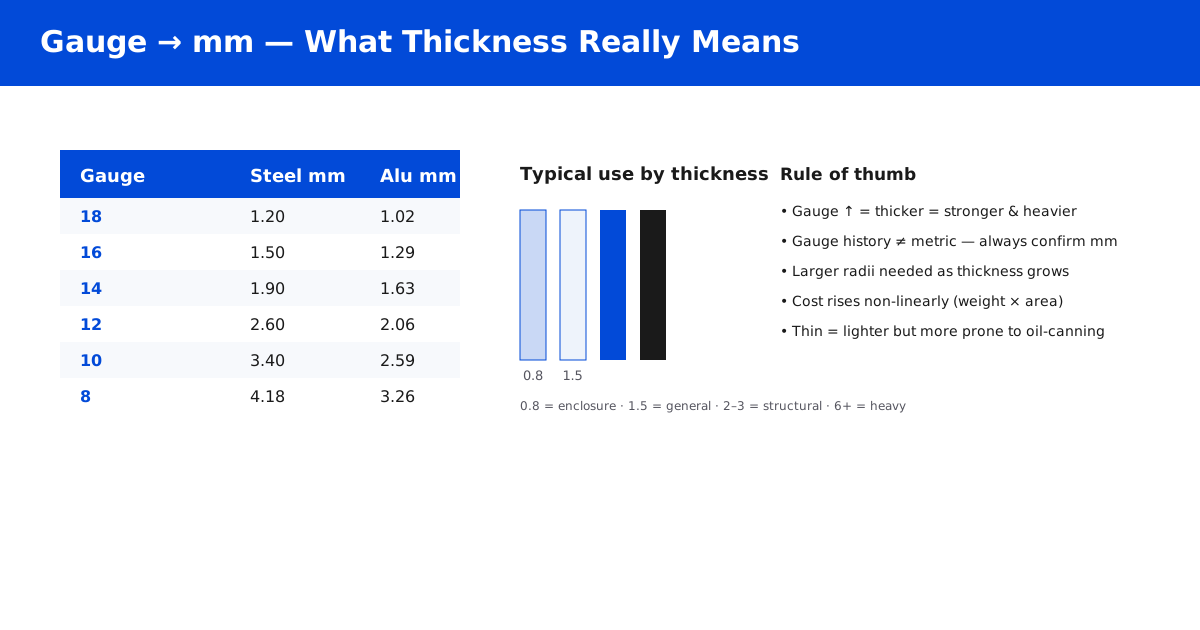
“Let’s use 16 gauge steel” is one of those phrases everyone throws around and few people actually understand. The gauge number is a historical naming convention, not a metric measurement — and it differs between steel, aluminium, and other metals.
This guide gives you the conversions you’ll actually use and, more importantly, how to choose the right thickness for strength, weight, and cost.
Why gauge is confusing
Gauge was created before metric standards, based on the number of times the metal was rolled. A higher gauge number means thinner metal, and the mapping is different for steel vs aluminium vs stainless.
Crucially, the same gauge number means different physical thickness in different materials. A 16-gauge steel sheet and a 16-gauge aluminium sheet are not the same thickness. Always confirm the actual millimetre value.
Gauge to millimetres (quick reference)
| Gauge | Mild Steel (mm) | Aluminium (mm) |
|---|---|---|
| 20 | 0.91 | 0.81 |
| 18 | 1.20 | 1.02 |
| 16 | 1.50 | 1.29 |
| 14 | 1.90 | 1.63 |
| 12 | 2.60 | 2.06 |
| 10 | 3.40 | 2.59 |
| 8 | 4.18 | 3.26 |
These are common values; actual sheets can vary slightly by mill. If the part’s dimensions matter, specify mm, not gauge.
How thickness drives strength
For a flat panel, bending stiffness grows with the cube of thickness (t³). That means a small thickness increase gives a much stiffer part.
Going from 1.2 mm to 1.8 mm (a 50% thickness increase) roughly triples the stiffness of a flat sheet. That’s why a structurally critical panel should be specified in mm with a stiffness target, not “bumped up a gauge.”
But the same rule works against you: thin metal is flexible and prone to oil-canning (those wavy, uneven panel surfaces). At some point you need ribs, embossments, or a thicker sheet to hold a flat face.
How thickness drives cost
Cost rises with weight, and weight rises with thickness. Roughly:
- Thicker = more material per part, so raw material cost rises linearly.
- Thicker = slower cutting and more expensive bending (more tonnage, bigger dies).
- Thin steel can also be more expensive per part than expected — handling, flatness issues, and rework can eat the savings.
The cheapest part is the thinnest one that still meets stiffness, strength, and finish requirements. Over-specifying thickness “to be safe” is one of the most common ways to waste money in fabrication.
Choosing the right thickness: a practical process
- Determine the load — what does the part carry, and how is it supported?
- Set a deflection target — how much flex is acceptable? (This drives stiffness, not just strength.)
- Consider the bend — thin metal bends easily but can show more springback and be harder to keep flat.
- Be honest about the finish — a thick, hard-to-machine coat on thin metal can look patchy at the edges.
- Check fastening — some hardware inserts need a minimum thickness to grip.
Common gauge choices by application
| Application | Typical Thickness |
|---|---|
| Decorative panels, light covers | 0.6 – 1.0 mm |
| Enclosures, brackets, general parts | 1.2 – 2.0 mm |
| Load-bearing brackets, structural cases | 2.0 – 4.0 mm |
| Heavy frames, machine guards | 4.0 mm + |
Don’t forget: gauge does not equal material grade
Gauge is thickness only. A 16-gauge part can be mild steel, stainless, or galvanized — each with very different strength, corrosion behaviour, and cost. Thickness and material are two separate decisions you have to make.
FAQ
Is 16 gauge steel thick or thin?
It’s a general-purpose thickness (about 1.5 mm). It’s thin enough to bend easily but strong enough for many enclosures and brackets.
Should I specify gauge or millimetres?
Millimetres. Gauge is ambiguous across materials and mills. If you use gauge, also give the mm value and the material.
What’s the thinnest sheet metal that bends well?
Around 0.8 mm and thinner can be tricky to keep flat and can show more springback. 1.2 mm and up is a comfortable range for clean bending.
Why is my thin sheet metal wavy?
That’s oil-canning — a flatness issue often triggered by internal stress, thin material, or large unsupported flat faces. Adding ribs or using a thicker sheet fixes it.
Related reading:
- How to Design for Sheet Metal Fabrication (DFM)
- Material Selection for Sheet Metal: A Practical Guide
- Common Sheet Metal Design Mistakes
Gauge is a useful shorthand but a dangerous spec. If you tell us the load, the environment, and the acceptable deflection, we’ll recommend the right thickness in millimetres and quote it accurately.